AI agents: the office work that now runs itself
What an AI agent is, how it differs from a chatbot, which business tasks it can take over today — and where a human is still required.
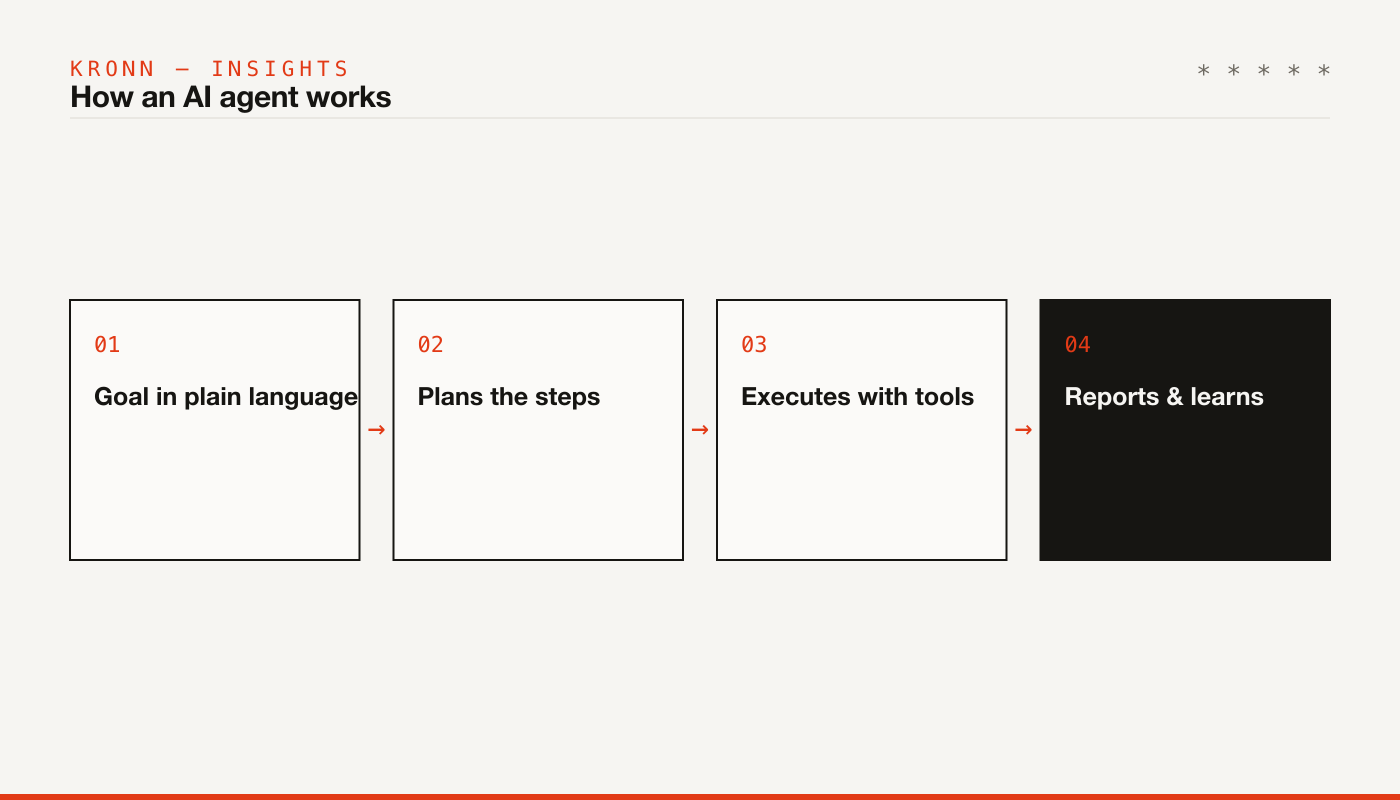
A chatbot answers when asked. An agent works: it takes a goal, plans steps, uses tools — systems, files, email — and comes back with a result. The difference sounds technical, but it’s operational: the first is a support channel, the second is workforce.
How it works in practice
You state a goal in plain language: “every morning, review yesterday’s orders, find the ones with address problems, fix whatever can be fixed from the customer’s history, and send me a list of the ones that need a phone call”. The agent breaks the goal into steps, connects to the systems you’ve allowed, executes, and reports what it did and what it couldn’t. Next day, again. Without boredom, without forgetting, without Mondays.
What businesses already delegate
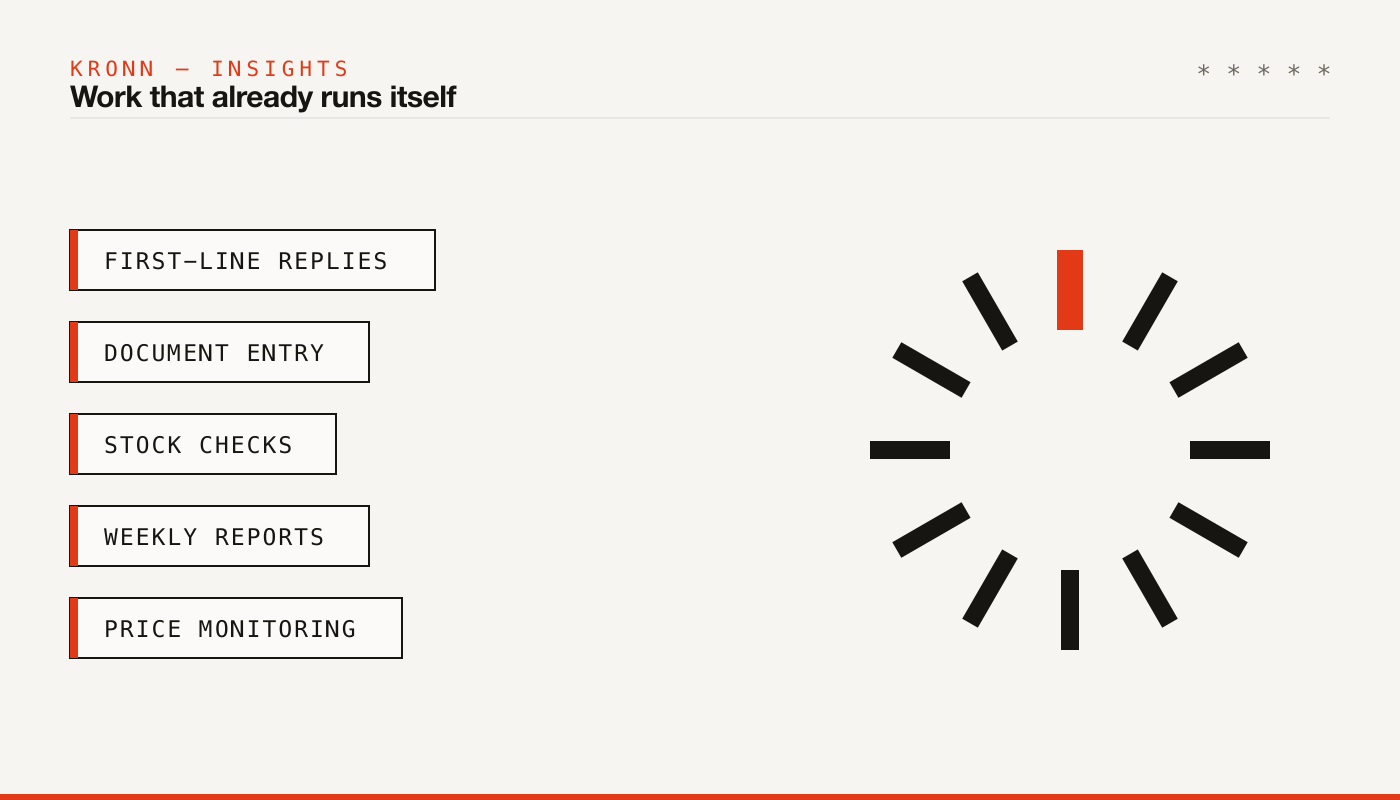
First-line communication. Replies to recurring requests, escalating to a human when the matter demands it — with a full record of what was answered.
Document entry. From photo or PDF into the system, with duplicate and mismatch checks. The task nobody ever loved.
Routine checks. Stock below threshold, competitor prices that moved, subscriptions expiring, backups that didn’t run. The agent checks daily and speaks only when it has something to say.
Reports. The weekly picture — sales, pending items, deviations — ready every Monday at 8, written in human language.
You may recognise the pattern: it’s the same philosophy we embed in our own products — Makker suggesting shift schedules and Xodroulis preparing the next order are, at their core, specialised agents for their industries. The software of the future doesn’t wait for clicks; it takes on jobs.
Where a human is (still) required
Everywhere a mistake is expensive or the judgement is human: commitments to customers, payments, hiring, anything legal. The practical rule we apply: the agent proposes, the human approves — and only when the track record shows consistently sound proposals does approval relax into spot-checking. Trust in systems is earned the way it is in people: through measurable work.
The first step
Don’t start from “we want AI”. Start from the list of tasks your team does every week and dreads — that list is your agent backlog. Pick the most repetitive one, give it a month’s trial, count the hours.
Kronn designs and builds AI automation and agents as part of the custom tooling we deliver. If you already know which task you’d like to see “run itself”, tell us about it — we’ll tell you honestly whether it’s ready to delegate.